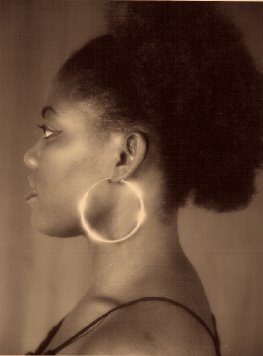
 I went looking for my copy of Prospect Magazine yesterday (don’t often get this, but had to read Petina Gappah’s story) and before I found it, I saw this magazine cover and thought, “Who’s the cover boy, then?” Artist Olu Oguibe on the cover of Modern Painters. Inside is an illuminating piece on the significant African presence at the Venice Biennale.
There will be an African Pavilion, including the works of some 31 artists, when the 52nd Venice Biennale opens on 10 June, and goes o n till 21 November.
For some sense of what a landmark this is, hear Modern Painters’ editor: “What’s truly indefensible about Venice is the indifference with which the Biennale has treated African art. Several otherwise highly capable curators have regarded contemporary artists from Africa over the past 51 incarnations of the Biennale with something near disdain.”
El Anatsui is one of several African artists featured in Venice Biennale curator Robert Stott’s signature exhibition, “Think with the Senses-Feel with the Mind: Art in the Present Tense.” That is aside from the African Pavilion itself, with artists and works selected for Venice by a panel of experts including Ghanaian director of London’s ICA Ekow Eshun & Nigerian Bisi Silva.
Showing works will be Yinka Shonibare, Tracey Rose, Olu Oguibe, Oladele Bamgboye and many others. Many exhibited works come from the collection of Congolese Sindika Dokolo, who seems to be reversing a trend in art collection and patronage. But the road to Venice has not been without its problems, namely questions about the source of the art-collecting Dokolo’s family wealth and hints of in-fighting between the African artists’ body itself.
Those who make it to the Venice Biennale and get to view the African Pavilion will hope it’s onwards ever for art from Africa.






.jpg)


 Posts
Posts

