Writings of the general word's body

Showing posts with label E.C Osondu. Show all posts

Friday, September 16, 2011

Achebe floors 50 Cent

The literary world has been abuzz over news that novelist Chinua Achebe forced rapper 50 Cent to change the title of his new movie, Things Fall Apart – because it’s the same as that of Achebe’s celebrated novel.

On the inside, Nigerian writers argued over what many suspected to be a hoax. After all, you cannot copyright a title, or can you? Plenty of songs, short stories, books and yes films – with same title and unrelated content. E.C Osondu has a short story called Waiting, so does Chika Unigwe. There are at least 2 films called Relentless etc.

The story gained more credence, for me at least, when the Guardian (UK) reported it, informing that Fiddy offered Achebe one million dollars to hold on to the title, but the author took it as an insult. Achebe’s legal team retorted, "The novel with the said title was initially produced in 1958 (that is 17 years before [50] was born)... [It is] listed as the most-read book in modern African literature, and won't be sold for even £1bn." But as a commenter under the Guardian story observed, novelist Muriel Spark and Lawrence of Arabia actor Peter O’Toole both have books titled Loitering With Intent.

Was 50 Cent right to have capitulated by offering $1m in the first place, since we don’t know whether or not Achebe copyrighted his book’s title? If he did, it would have been a highly unusual move to pull off. Highly unusual to have scuppered 50 Cent in this way, although admittedly Things Fall Apart has a highly unusual reputation as a work of literature. Achebe himself got the title of his novel from a poem by W.B Yeats, The Second Coming, so how can he lay sole claim to it?

Of particular concern to writers, I suspect, is what this dangerous precedent portends for creative works, especially writing, from now on. Someone has just published a novel the title of which is strikingly similar to my planned collection of short stories; will I have to change my title? I hope not.


Whatever one makes of 50 Cent’s declaration that he’d never heard of Achebe’s book, particularly troubling is the fact that many of the rapper’s fans – even some of Nigerian descent – were not aware of Achebe’s existence until he clashed with 50 Cent. A bizarre situation that has a gangster rapper ‘validating’ one of the world’s greatest novelists. Still, the rapper is to be commended for writing a whole movie himself, a story about an American football player diagnosed with cancer, directed by Mario Van Peebles. Because of Achebe’s objection, the film has been renamed All Things Fall Apart, reports say.

Now, I hinted that I believed the story because the Guardian published it – a stance that comes with its own problematic, since the UK Guardian can be hoaxed. The paper did a further piece on the ‘title fight’ yesterday, crediting a Nigerian news website for breaking the story. This had the curious effect of leading some to hold on to the hoax theory – it’s a Nigerian website after all. Another problematic, since a story broken in the Nigerian media is not by definition a 419 scam.

The news did not strike me as a hoax; the Guardian has unimpeachable contacts with Achebe’s representatives, agents and so on, I’m sure, to verify its story. As for the Nigerian media, lots of people have direct links to the novelist’s inner circle. Besides, if a hoax, who stood to gain from it? Certainly not 50 Cent; extra publicity for his film is hardly worth the dent on his ego. And Achebe needs the column inches like he needs a million dollars.

There are reasons why Fiddy’s people would want to remain silent on the embarrassment. The unease among the literati also means that, demonstration of his might aside, Achebe does not come out smelling of roses either. “Hawkish” is how one observer described the novelist’s action over a title he would not have been able to use had Yeats taken a different view – a title he raised no objection to The Roots using for an album years back.

Meanwhile, further confirmation of the veracity of the story: Hip-Hop bible VIBE magazine has reported it, (referencing a Ghanaian website). And the Hollywood Reporter reports from the Toronto Film Festival that Image Entertainment has picked up US rights to 50 Cent’s movie. The title? All Things Fall Apart.

Wednesday, July 27, 2011

Readings, writing and 'African Writers'


The Life House on the night of E.C Osondu's reading. Photo by Olushola Aromokun.
More images here.

Was at E.C Osondu's reading at The Life House last Friday. It was a mostly inner-core writers' audience, which made for a somewhat sharp edged spiritedness sometimes. Artsville columnist and all-round arts-man-about-town Toyin Akinosho came in at some point and straightaway fired a volley of questions at Osondu. Who, perhaps having had some inkling of a not-too-flattering pronouncement on Voice of America by the former in a recent Artsville, seemed prepared for just such an encounter, and gave as good as he got.

It was an interesting evening (
see art historian Chika Okeke-Agulu's post on the reading), one in which the book talk spilled onto The Life House lawn even after the reading event was over. Everyone seemed to have an idea what kind of story they wanted Osondu to write, but which he didn't, to their chagrin. Should he have dwelled so much on misery? Should the stories have begun in Lagos sequentially to end up in America? Why so many urban myths? ("rural myths" even got a mention, whatever those are). Discussion on the lawn even touched on how successfully or otherwise the author had related the Nigerian Disaspora experience. Me, though I could see where some of the discussants were coming from, felt they may have been too prescriptive at times.

"I would be bothered if my story made you happy," declared Osondu, in response to the repeated suggestion that he focuses too much on the negative. He was an excellent advocate for himself, defending his right to write whatever catches his fancy, let those who don't like it take a hike. He didn't use quite those words... I loved that whatever he said, however simple, showed a deep grounding in the writing craft.

"Boring" was someone's view of some of the anxieties over Osondu's writing. And 'boring' is what I have come to think of the never-ending debate over the term 'African Writer', a beast that rears its head regularly even at readings in Lagos these days. At one reading last year, practically everyone on the stage - even those that never voiced any issues with the term before - talked the matter to death. Only one writer said something like: The hell with it. I'm an African writer, so what? The others talked and talked, explaining their concerns to the point where we in the audience - and I suspect even they - no longer knew for sure what those particular concerns were meant to be. The annual Caine round has just ended and I see the argument has now extended to whether the 'African' should be dropped from the Caine Prize altogether (see Tolu Ogunlesi's reflections on this year's Caine). Ogunlesi agrees with the latest high profile objector to 'African Writing', 2010 Caine winner Olufemi Terry. On the contrary, I find Terry's manner of prosecuting his 'African anxiety' somewhat distasteful.

Olufemi Terry, once a seemingly peripheral figure on the South African writing scene, won the Caine Prize for Stickfighting Days and made lots of people in Cape Town and Johannesburg very happy. If we didn't know before, we quickly discovered that, despite his Nigerian/Yoruba first name, the Caine winner is actually Sierra-Leonian-born, of Antillean heritage. The citizen of the world quickly rubbished the 'African Writing' tag of the prize that had just given his career a space shuttle shot in the arm. Yet he proudly went onstage to collect the prize and smiled through photographs celebrating him as the winner of The Caine Prize For African Writing. He didn't seem to notice when his story was being entered for the Caine, I suppose. Or could he not have climbed the stage to turn down the prize? Lots of people have turned down prizes on principle and we actually admire some of those folks.

Not Terry, who declared, "The label 'African writer' is not a particularly helpful one ... Whether it's journalism or fiction, there is too much emphasis put on issues such as poverty or disease, and I feel the label 'African writing' exacerbates that particular tendency." This, from the author of a nihilistic story about poor glue-snifing street children?

Another year goes by, it's time for another Caine and up pops Terry again, in Granta, to say, "There is, for me, no African writing, only good writing and bad writing." A fine thought, for sure, from whichever angle you want to look at it.

Yet there remains that niggly thing, as Terry fills us in on the last one year. He who had sought more of a shift away from writing about Africa set on the continent in favour of the Diaspora, quickly moved to Struttgart, Germany "for personal reasons" (in case you were going to ask). It concerned him that, during his Caine-facilitated Georgetown residency, American university and secondary school students read baffling meanings into Stickfighting Days - as if secondary school students cannot be found reaching baffling conclusions about all sorts of stories, including 'Non-African' ones.

It bothered him also that non-Africans assume, on the strength of the author's bio alone, that the story is set in Sierra-Leone. As if Will Self and Martin Amis agonise over whether readers in Lagos assume, no thanks to bios, that their novels are set in England. Does the Reader not bring someone of him/herself to the text? And though there hasn't been much by way of publishing activity from him since his Caine win, Terry is able to boast that he has been able to stretch the understanding of 'African writing' till the label was revealed as "meaningless."

I never read Stickfighting Days all the way through until about two weeks ago, and I thought it was a masterful piece of writing, a worthy Caine winner. But I think Olufemi Terry is looking the gift horse too intently in the mouth.

It's been over a decade now since Leila Aboulela won the very first Caine Prize for African Writing, for Sudan. Aboulela could have busied herself shooting from all angles at labels pinning her to 'Africa', the Arab World or even Britain, where she is based. But she doesn't. She just writes. Between her and Olufemi Terry, I know whose approach I prefer.

E.C Osondu is reading on Saturday at Terra Kulture, Victoria Island, Lagos, starting at 3pm. Across the lagoon in Yaba's Debonair Bookstore, another set of writers - including Toni Kan, Jumoke Verissimo and Akachi Adimora-Ezeigbo - are reading also at 3pm (see flyer below).


Wednesday, July 20, 2011

The E.C has landed

2009 Caine Prize winner E.C Osondu is in Lagos for a series of readings for his book, Voice of America, a collection of short stories published locally by Farafina. Here he is photographed earlier today by Femi Adebesin-Kuti. Artist/writer Victor Ehikhamenor and I were on hand to join in series of fun photographs with E.C and his friend, Emeka.

The real business starts Friday when Osondu kicks off his book tour with a reading event at The Life House. He will have 2 more readings in Lagos and one in Port Harcourt with Koko Kalango's Rainbow Book Club. Details below.

Friday July 22: Abule Book Club, The Life House, 33 Sinari Daranijo Street, Victoria Island, Lagos. 6pm.
Saturday July 23: Patabah Bookshop, Shoprite Mall, Surulere, Lagos. 3pm.
Sunday July 24: Rainbow Book Club, Le Meridien, Ogeyi Place, Port Harcourt. 4pm.
Saturday July 30: Terra Kulture, Tiamiyu Savage, Victoria Island, Lagos. 3pm.


Photos by Femi Adebesin-Kuti


Saturday, February 26, 2011

Commonwealth Writers' Prize 2011

While Wordsbody was sleeping, the Commonwealth Writers' Prize shortlists were announced...

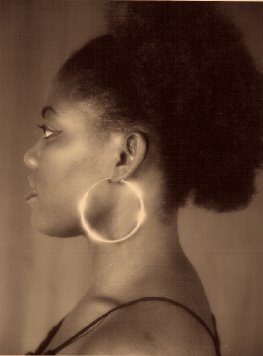
Here's the UK-based Chioma Okereke, a writer whose face some are only just beginning to notice, after noticing her book first, of course. Especially now that her debut novel, 'Bitter Leaf' has been shortlisted in the first round of the prize, in the Best First Book category in the Africa Region. I love this photo of her because she evidently takes the concept of natural hair to brave new lengths. And having met her dad, I look at the daughter and I just see the father.

Among those joining Ms Okereke in the First Book category is Caine winner E.C Osondu, whose collection of short stories,
'Voice of America' has been reviewed by several of his peers, including Petina Gappah and Helon Habila.

Habila himself in the running for the Commowealth in the Best Book category for the Africa Region for his third book, 'Oil on Water' - the only Nigerian in this segment. Nigeria has 3 writers in contention this year, the closest competitor to South Africa, which weighs in with 7 shortlisted writers.

While
I'm only going to reproduce the lists for Africa, the other Commonwealth regions are also worth a look. How else would one see that the very first winner of the Caine Prize for African Writing, Leila Aboulela, is now shortlisted for the Commonwealth Writers Prize for the South Asia and Europe region, flying the flag for the United Kingdom? Meanwhile, Aminatta Forna, who could comfortably have been 'British' now, has been entered and shortlisted in the Africa region for 'The Memory of Love', a contender for Sierra Leone. Good to know that when it comes to national allegiances in the world of literature, everyone discovers where the dice falls, eventually.

Regional winners will be announced next week (March 3) and the overall winners, on May 21.


Shortlists for the Africa Region

Africa Best Book
The Memory of Love by Aminatta Forna (Sierra Leone)
Men of the South by Zukiswa Wanner (South Africa)
The Unseen Leopard by Bridget Pitt (South Africa)
Oil on Water by Helon Habila (Nigeria)
Blood at Bay by Sue Rabie (South Africa)
Banquet at Brabazan by Patricia Schonstein (South Africa)

Africa Best First Book
Happiness is a Four Letter Word by Cynthia Jele (South Africa)
Bitter Leaf by Chioma Okereke (Nigeria)
The Fossil Artist by Graeme Friedman (South Africa)
Colour Blind by Uzoma Uponi (Nigeria)
Voice of America by E. C. Osondu (Nigeria)
Wall of Days by Alastair Bruce (South Africa)


Image: Publicity Photo

Thursday, April 29, 2010

New Reads

Two new reads for you - two stories by two writers whose protagonists have rhyming names: Paito and Kaito. It's like E.C Osondu and Unoma Azuah planned it, though I'm sure they didn't.

2009 Caine winner E.C. Osondu's new story is in Atlantic Fiction 2010, and reminds me of old favourites by this writer, like his Caine shortlisted 'Jimmy Carter's Eyes'. The story this time is titled 'A Simple Case'.

It was simple enough. Paito is waiting for his prostitute girlfriend, Sweet, to service a punter when the police raids the Jolly Hotel. He finds himself in a police station and ultimately in the dreaded Area F. Interestingly enough, I had occasion to pay a couple of visits to a real Area F police post in Ikeja last year (not to worry, there was nothing 'Jolly' about my reason for going there); and I pass by Alade Market off Allen Avenue all the time. Osondu's character, Paito, is a second hand trader at Alade Market, so the landscape of this story's not so alien to the average Lagos dweller, though not everyone gets roped into trumped up allegations of robbery, as happens in this very believable story of suffering, which still allows the reader lots of smiles. Paito ends up in an Area F cell, a Jungle Republic presided over by Presido. Paito must sweet talk his way out of this sticky situation, in a story that reads nicely to its 'Jolly' end.

Excerpt
The man who had spoken to Paiko was the first to speak. He cleared his throat and launched forth boastfully.

“My name is Robert, but I am popularly known as Bob Risky. In the daytime, I am a motor-park tout at Iddo, but at night I am a robber. I have been robbing and killing since I was expelled from Mushin Grammar School in form two, for smoking and selling marijuana. No operation is too risky for me to undertake. That is how I earned my nickname, Risky. I have been detained in almost all the police stations in Lagos, including Isokoko, Panti, Alagbon, Bar-Beach, and even the old station on Malu Road. I was drinking in my girlfriend’s beer parlor when the police raided the place and arrested me. They found a locally made pistol in my pocket and some wraps of marijuana. When they are tired, they will release me. I have no other profession than armed robbery, and, as we say, once a robber, always a robber.” Bob Risky finished his introduction, to loud applause. Even the Presido appeared to be impressed.


In Unoma Azuah's story, Sirens, Kaito is a new arrival in the US. From the airport he begins he search for the only two people he knows in America, two 'brothers' from his village who preceded him in the search for the American dream. During his search he encounters two women who know the men, the 'sirens' of the story.

Excerpt Kaito sat in the well-furnished lobby. A movie was playing on the giant screen TV, but he was uninterested. What if Kamalu never turned up? He thought. A few minutes later, the lady at the desk joined him with an extra cup of coffee. Her red lip stick was smeared at the edge of the white mug. Her face powder didn’t quite hide the light wrinkles on her face.
“What’s your name again?”
“My name is Kaito.”
“Coffee?”
“No, thank you.”
“It might help calm your traveling nerves.”
“You are right, thank you. What is your name?”
“Beth.”
“So you believe that Kamalu is out of town?”
“Well, I haven’t seen him in quite a few days. Are you related to him?”
“He’s my brother….from my village.”
“He didn’t know that you were coming to visit?”
“I sent him an e-mail and left messages on his phone, and while I hadn’t heard from him, I purchased a ticket anyway because my travel visa had kicked in.”
Beth’s eyes settled on his muscles. “You look quite fit. Are you an athlete?”
“No.”
“You and Kamalu are from where again?”
“Nigeria.”
“And the name of your village?”
“My village is called Iwu. I’ll show you pictures.” Kaito retrieved some pictures from his bag.
“The lake in the photo of you fishing is beautiful.”
They spent some time going over the pictures until a little after midnight. Beth’s shift had ended, but there was no sign of Kamalu. She sat with Kaito while he waited.

Monday, January 07, 2008

New Reads

E.C. Osondu's story, 'Voice of America' is published in Vice Magazine. Onwordi exchanges correspondence with his American pen pal, Laura. He and his friends think it's love, but Onwordi and his 'girl' may be talking at cross purposes.
~

Excerpt
Onwordi began to read from the letter to us. The girl’s name was Laura Williams. She had recently moved with her parents to a farm in Iowa from a much larger city. She had one more year before finishing high school. She was going to take a class on “Africa: Its People and Culture” in the fall and was curious to know more about African culture. She wanted to know whether Onwordi lived in the city or in a village. She also wanted to know if he lived close to lots of wild animals like giraffes, lions, and chimpanzees. And what kinds of food did he generally eat, were they spicy? And how were they prepared? She also wanted to know if he came from a large family. She ended the letter with the phrase “Yours, Laura.”

“Oh my God,” Lucky said, “this is a love letter. The American lady is searching for an African husband."
~
- Read Voice of America (and don't forget Part 2).

~
I was attracted to Chielozona Eze's story, 'Mallam Illia's Meat Shop' - published in Eclectica - for its many literary references, some quite obvious to any reader of Nigerian writing; and a few others recognisable only to literary insiders. But as I read on I wondered a bit about the very pointed ethnic labelling in the story. From the off, the protagonist, Chinelo, is described as "an Igbo woman". Why can't she just be a woman, I thought, especially as her ethnicity is restated in innumerable other ways later in the story (everyone wears their ethnicity in this piece: the Yorubas, the Hausa and the Igbo). But I suppose it comes with the territory, in a story about ethnic cleansing and the intermittent murder of the Igbos in the largely Muslim/Hausa Northern Nigeria. And it is Chinelo's relationship with a Hausa meat seller in her native Igboland that gives heart to this story, set during the killings sparked by the publication of cartoons of the Prophet Mohammed in faraway Denmark.

Excerpt
In the dining hall were many people, half of them evidently Igbo from snippets of their conversations—patches of English and Igbo phrases, most of which were boastful in nature. "I did it!" "I made it!" "I showed them!" It was usual with many Igbo traders They loved to boast about where they had been and the profit they made in their daring business ventures. About two tables to her left were also some of the conference attendees. She had exchanged greetings with some of them the day before. They spoke Igbo with Owerri dialect. She put two teaspoonful of coffee in the cup, poured hot water, and as she was stirring, readying her taste buds for the first sip, a middle aged, plump woman with cornrow hair braids sped into the dining hall, crying in Igbo, her gaze directed to one of the tables on the left. "Ha emekwa ya ozo"—they've done it again. "Ndi Awusa!—the Hausa people. My broda! My broda. Killed."

Lightning lashed through Chinelo's heart. Three words that should never be mentioned in a breath ­ Moslems! Awusa! Killed—conspired to paralyze her. Hadn't she been warned by her mother? She did her best to shrug it off as there was no panic yet in the dining hall. People weren't yet running to safety. Chinelo was able to gather from the few exchanges between the woman and the people that her sister in-law was living somewhere in the North and had called her by phone to relay the information.

- Read Mallam Illia's Meat Shop.
*

Sunday, December 23, 2007

Books of 2007


My compilation of Writers' Books of 2007 has been published in the new 'Holiday' issue of African Writing. Biyi Bandele's Burma Boy and Helon Habila's Measuring Time - are 2 of the hot picks this year.

Here's how E.C. Osondu introduces his chosen books:
"It was a cruel, gray, typical upstate New York winter. I was teaching in a small college in the outskirts of the city. It was a long forty-five minutes’ commute and the only thing of interest en route was the burial place of a female missionary Laura Maria Sheldon who had tried to convert the Seneca Indians. And of course there was the sprawling Onondaga cemetery where I once counted ten tombstones with the name Muldoon as the bus crawled past."

Already a story there, no? Other contributors include: Brian Chikwava, Blessing Musariri, Wadzanai Mhute, Aminatta Forna, and Akin Adesokan.

~ ~ ~

I have also contributed images from the PEN Women's Conference in Dakar to the new issue of Ponal.

Tuesday, July 03, 2007

2007 Caine Prize

Monica Arac de Nyeko on her Caine shortlisted story, Jambula Tree...
"Jambula Tree is about loving against a very strong tide - society. Its just one of those stories that chooses you, you don’t choose it."

- read the interview.

~
E.C Osondu on his shortlisted story, Jimmy Carter's Eyes....
"Blindness, or the subject of blindness in fiction, has always fascinated me. From Jose Saramago’s novel of that title to Raymond Carver’s awesome short story, ‘Cathedral’. By the way, Carver used to teach here at Syracuse University and his ghost still roams the Hall of Languages. I also happen to have had a neighbour who is blind and I remember chuckling when I was moving into my apartment and there was this sign that said “Blind Person Area”. Still on this neighbour, he was anything but your typical blind man, if any such exists. The first time we met he told me a joke that was, to put it mildly, risqué - where did the 85-year-old man who just got married spend his honeymoon? At Viagra Falls! The story itself - ‘Jimmy Carter’s Eyes’ - is an attempt at allegory, which is all I can say about it."

- read the interview
~

  • Also shortlisted are Uwem Akpan, Ada Udechukwu & Henrietta Rose-Innes. Shortlisted writers will read @ the Purcell Room, London on Sunday 8 July (7.45pm) - as part of the London Literature Festival.
  • Caine winner is announced on Monday 9 July.

Monday, June 25, 2007

Million Writers Vote

EC Osondu in Million Writers' Vote


Caine Short-listed E.C Osondu - is the only African writer left in the final shortlist of 10, for the 2007 Million Writers Award. Osondu is on the list for his short story, A Letter From Home.

The search/vote is under way to find the best Online short story. Voting continues till June 30.

Vote here.