Writings of the general word's body
Wednesday, December 21, 2011
Writers choose their books of 2011
Monday, January 15, 2007
To the Reader

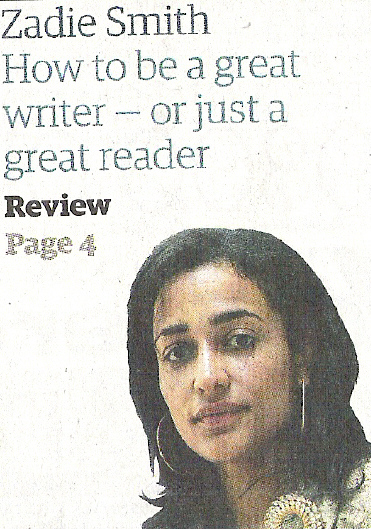
Zadie Smith has written her tips on how to be a good writer & reader - or rather, how to 'fail better'. More tips to come next week. She ends for now with a word for the reader: gotta work.
Excerpt
10. Note to readers: a novel is a two-way street
A novel is a two-way street, in which the labour required on either side is, in the end, equal. Reading, done properly, is every bit as tough as writing - I really believe that. As for those people who align reading with the essentially passive experience of watching television, they only wish to debase reading and readers. The more accurate analogy is that of the amateur musician placing her sheet music on the stand and preparing to play. She must use her own, hard-won, skills to play this piece of music. The greater the skill, the greater the gift she gives the composer and the composer gives her. This is a conception of "reading" we rarely hear now. And yet, when you practise reading, when you spend time with a book, the old moral of effort and reward is undeniable. Reading is a skill and an art and readers should take pride in their abilities and have no shame in cultivating them if for no other reason than the fact that writers need you. To respond to the ideal writer takes an ideal reader, the type of reader who is open enough to allow into their own mind a picture of human consciousness so radically different from their own as to be almost offensive to reason. The ideal reader steps up to the plate of the writer's style so that together writer and reader might hit the ball out of the park. What I'm saying is, a reader must have talent. Quite a lot of talent, actually, because even the most talented reader will find much of the land of literature tricky terrain. For how many of us feel the world to be as Kafka felt it, too impossibly foreshortened to ride from one village to the next? Or can imagine a world without nouns, as Borges did? How many are willing to be as emotionally generous as Dickens, or to take religious faith as seriously as did Graham Greene? Who among us have Zora Neale Hurston's capacity for joy or Douglas Coupland's strong stomach for the future? Who has the delicacy to tease out Flaubert's faintest nuance, or the patience and the will to follow David Foster Wallace down his intricate recursive spirals of thought? The skills that it takes to write it are required to read it. Readers fail writers just as often as writers fail readers. Readers fail when they allow themselves to believe the old mantra that fiction is the thing you relate to and writers the amenable people you seek out when you want to have your own version of the world confirmed and reinforced. That is certainly one of the many things fiction can do, but it's a conjurer's trick within a far deeper magic. To become better readers and writers we have to ask of each other a little bit more.
Read all the tips...
Update 22 January
Fail better, read better...
"I have said that when I open a book I feel the shape of another human being's brain" - from the concluding part of Zadie Smith's tips.
Monday, December 18, 2006
New Reads
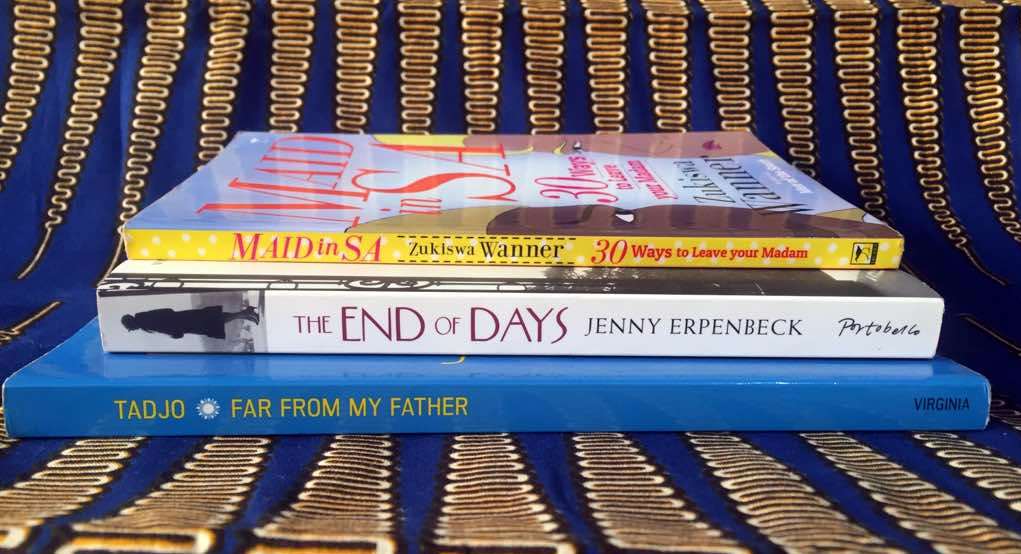
- The above is extracted from Becky Clarke's introduction to the current issue of Crossing Borders Magazine, which offers up new short stories by African writers including Jackee Budesta Batanda and Blessing Musariri. Read it all here.
In a new story by Nadine Gordimer published in The New Yorker, a South African woman contends with a sense that her husband, a cellist, is having an affair. In this excerpt, she wonders who the other woman might be...
Or was the woman nearer home? A member of the national orchestra in which he and his cello were star performers? That was an identification she found hard to look for, considering their company of friends in this way. A young woman, of course, a younger woman than herself. But wasn’t that just the inevitable decided at her mother’s tea-table forum? The clarinet player was in her late forties, endowed with fine breasts in décolleté and a delightful wit. There was often repartee between them, the clarinet and the cello, over drinks. The pianist, young with waist-length red-out-of-the-bottle hair, was a lesbian kept under strict guard by her woman. The third and last female musician in the orchestra was also the last whom one would be crass enough to think of: her name was Khomotso; she was the second violinist of extraordinary talent, one of the two black musicians. She was so young; she had given birth to an adored baby, who, for the first few months of life, had been brought to rehearsals in the car of Khomotso’s sister so that the mother could suckle the infant there. The director of the orchestra gave an interview to a Sunday newspaper about this, as an example of the orchestra’s adaptation to the human values of the new South Africa. The violinist was certainly the prettiest, the most desirable, of the women in whose company the cellist spent the intense part of his days and nights, but respect, his human feeling, would be stronger than sexual attraction, his identification with her as a musician would make distracting her from that taboo. As for him, wouldn’t it look like the old South Africa—a white man “taking advantage of” the precariously balanced life of a young black woman?
Monday, October 30, 2006
He Claims To Be A Writer
Rebutting the British… and their Visas, in Verse
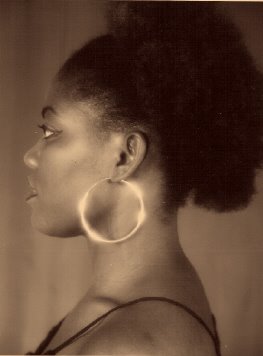
Acclaimed poet and writer, Odia Ofeimun, one of Nigeria’s finest public intellectuals, disclaims the conceit of the British Consulate – that denied him visa – because "he claims to be a writer". Adefayi Martins reports
Oscar Wilde, the late Irish playwright, and iconoclast par excellence, did not suffer fools gladly, both is his art and in real life. He had, like many Europeans of his age, an understated continental disdain for the United States, the political, economic and spatial behemoth that always fancied itself as "the world". When he visited the United States, long before the current age of the finger-prints and other indignities that the US forces visitors to experience at her entry points under the guise of keeping out unwanted guests, Wilde was asked if he had anything to declare. "Nothing", the witty and deprecating Wilde replied, "except my genius"!
The US Customs official must have had a sense of humour. He allowed Wilde to pass. The officer at the British Consulate that attended to Odia Ofeimun, acclaimed poet, writer, journalist, political scientist, polemist and public intellectual, when he applied to renew his UK visitor’s visa must have been humourless. They often are, at any rate. The official denied Ofeimun, who lived in the United Kingdom as a scholar at the oldest British University, Oxford, for a few years in the 1980s, and has visited the UK many times since returning home, entry visa last month. He must have thought the poet lied. Incidentally, the latter phrase is the title of the affable Ofeimun’s celebrated poetry collection. The official stated in denying Odia visa – in a sticker attached to his passport - that "he claims to be a writer". A most condescending insult added to the injury of visa denial.
Ofeimun is not one to take such insult, which many Nigerians regularly take - with equanimity from the British and other consulates in Nigeria - lying low. The denial comes exactly ten years after the same British High Commission denied him visa to enjoy a facility provided by their own cultural agency, the British Council, for the poet to see the London Book Fair. The Consulate later relented when challenged, only for the more humourless General Sani Abacha’s goons at the airport to seize Odia’s passport.
In his poetic response to the recent British conceit entitled, "I am a Writer…", Ofeimun tells the joyless consuls,
If the grating visa-granting official is still unconvinced, the poet adds that the years he has spent bearing that passport as a writer draws
humus from Year Twelve
When school bells added my name
To the throng gamboling along
With the Pied Piper of Hamellin
And, the Ancient Mariner
Whose magic, and the bamboo flutes
Of Martin Carter in Guyana jail
Took me by hand to know Ogun
when Okigbo’s road was famished.
If the British Consulate is unaware of the poet’s accomplishments, or what another poet, Okinba Launko describes in his poem, We are Climbing Still, as the "several prizes we were showered with/and the congratulations we wear like mendallions!", Ofeimun sings of his possession of a cultural capital which the British themselves claim to value, but have devalued "through the syllabus of errors…(that) set no column to my stripe" marking the denial of visa to him, this second time. He tells the consulate in the poem that, at 18, his "waify poems" were already "elevating siblings" at the West African Examination Council examinations, that is the General Certificate of Examination (GCE) and the School Certificate exams, popularly called School Cert and even university thesis, long "before stamps hit the pad at the Passport Office".
The poet presses his claims further. For the avoidance of doubt, he advertises his artistic victories that link with world cultures at famous cultural centres of the world, including the British cultural centres:
I do not claim to be, I am a writer
Whose trip under African skies
Took Sun-dance to Sadler’s well
Queen Elizabeth Hall by the Thames
And Fleet Street of glancing nods
with poesy of the body’s rhythm
rounding the Cape of Good Hope
and toasting five hundred years
above visa-gripe, truth’s fibre
as art for life vouchsafes it
setting navel closer to navel
to keep fellow-feeling in grace.
As he tells friends, Ofeimun will soon journey to South America where, if the poet can be unveiled, he has some honey, who - as he croons in his poem, "Oyin" -
breathes a quiet ardour
against a calculus of (perhaps, British) nerves.
Ofeimun, who, a few years ago, predicted the terrible fate that General Abacha met in one of his poems – Thighs fall apart, the General (dis)appears – insists that though
the division of spoils
encumbering the earth with visas
can stop his travel to Britain, it cannot encumber his spirit, because
I’m happy, beyond mere fashion
for trips that visas can’t deny.
The British consulate can deny Odia Ofeimun visa, but it cannot deny him his voice – his verse.
- Odia Ofeimun has since travelled through Britain.